HDAC inhibition via SAHA ameliorates doxorubicin-induced cardiotoxicity
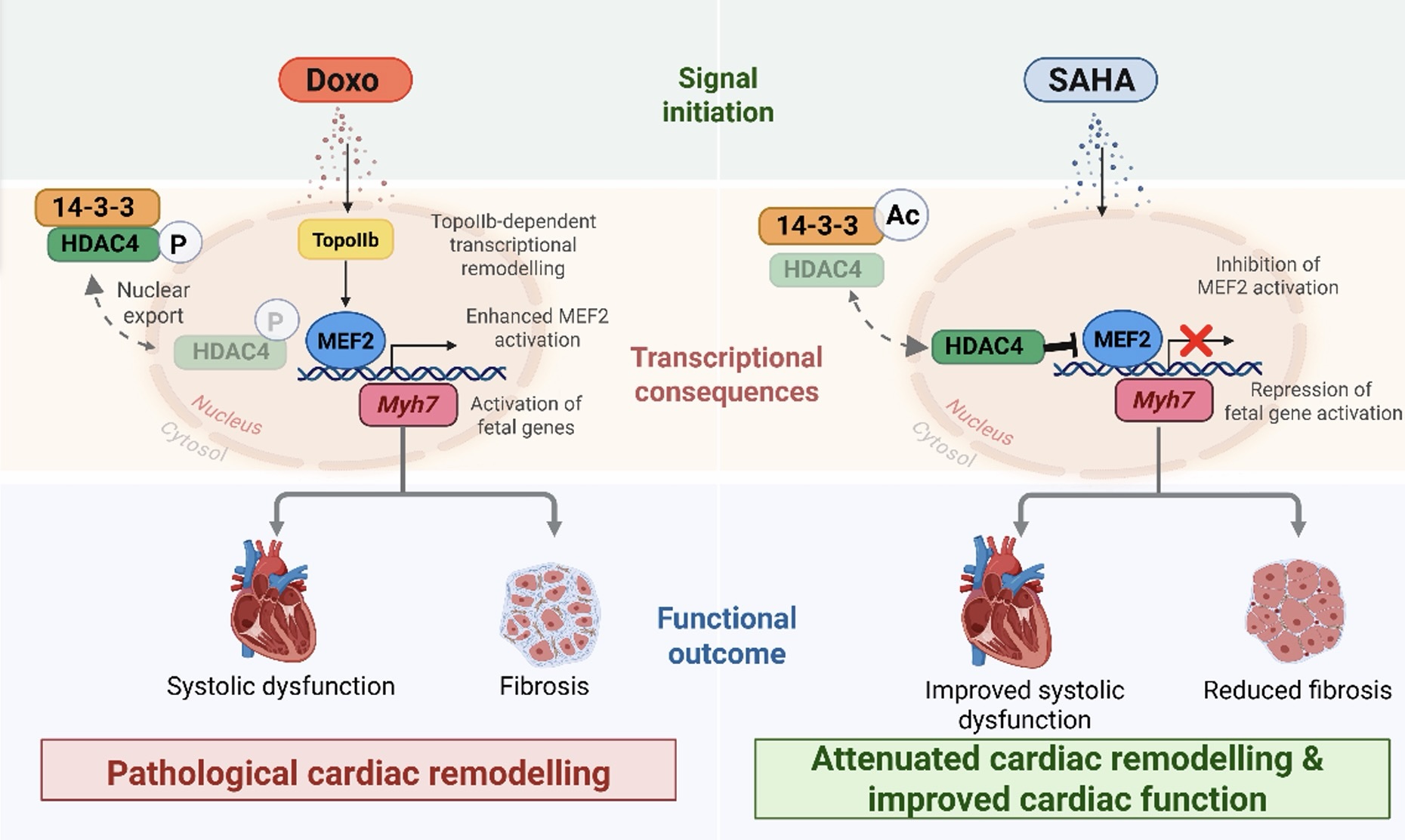
Anthracyclines such as doxorubicin remain a cornerstone of cancer therapy, but their cardiotoxic side effects are still incompletely understood and no broadly effective preventive strategy exists. This study identifies a new mechanistic link between doxorubicin-induced topoisomerase IIb activity and MEF2-driven pathological gene expression in cardiomyocytes, showing that doxorubicin preferentially recruits topoisomerase IIb to MEF2-associated cardiac gene promoters and thereby boosts MEF2 activity.
The pan-HDAC inhibitor SAHA counteracts this response, but only when HDAC4 is present: SAHA promotes acetylation of the chaperone 14-3-3, which disrupts its binding to HDAC4/5, keeps these class IIa HDACs in the nucleus, and represses MEF2-driven transcription. In mice, SAHA co-treatment reduced doxorubicin-induced cardiac dysfunction and fibrosis, while cardiomyocyte-specific loss of HDAC4 abolished this protection. The findings position HDAC inhibition as a potential cardioprotective repurposing strategy alongside anthracycline chemotherapy.
To the publication →